Visa Applications as a Black American: What No One Tells You
Updated: Sep 25
Most visa guides hand you a checklist and call it a day. They tell you which documents to gather, how much money to show in your bank account, and how long processing takes. What they skip entirely is the layer of reality that Black Americans navigating a visa application face that other applicants simply do not. Language barriers, skeptical consular officers, documentation standards that seem to shift depending on who is sitting across the desk, and a near-total absence of guides written for people who look like you. This article is written for Black expats and Black Americans planning a move abroad who want honest, practitioner-level immigration advice, not a sanitized overview.
Table of Contents
Quick Takeaways
Key Insight
Explanation
Start 3 to 6 months before your planned move date
Most work and residency visa processes take this long. Digital nomad visas can be faster, but surprises happen. Building in lead time is not optional.
Your income type determines your visa category
Remote employment, freelancing, passive income, and investment income often qualify for different programs with different income thresholds. Match the visa to your actual income structure.
Over-documentation is a real tactic, not paranoia
Black Americans frequently report being asked for more supporting materials than standard checklists require. Bring more than the minimum. It reduces room for discretionary denial.
Police clearance requirements can surprise you
Many countries require a background check from every country you have lived in for a significant period, not just the United States. Request these documents early, as they often require apostille certification.
Language barriers have real financial consequences
Errors in translation or misunderstood requirements can delay or sink an application. Consular staff may not speak fluent English. Budget for professional translation and local legal help.
Ghana's Right of Abode is a unique option for the African diaspora
Some Black Americans of African descent may qualify for Ghana's Right of Abode, which provides permanent residence and visa-free entry. This is not a widely publicized pathway.
Build a paper trail of financial stability, not just a snapshot
Consular officers scrutinizing Black American applicants sometimes look past a single bank statement. Consistent account history over 3 to 6 months carries more weight than a recent large deposit.
What No One Tells Black Americans About Visa Applications
The standard expat immigration narrative assumes a neutral playing field. The honest version does not. Black Americans living abroad face a compounded challenge: they are navigating foreign immigration systems while carrying the same anti-Black bias that follows the diaspora globally. The mechanics of this show up in visa applications in ways that are rarely named directly.
Consular discretion is real, and it is broad. Officers have latitude to request additional documentation, schedule follow-up interviews, or simply move slowly on applications with no explanation required. While there is no official policy targeting Black applicants, the practical experience reported by Black expats is consistent: bring more, prove more, and expect the process to take longer.
Language barriers compound this problem in ways that other Americans typically do not encounter. As one account from the Black expat community put it, language difficulties have proven particularly costly when seeking help with visa applications or obtaining long-term residence. Hiring a local immigration attorney who speaks the consular language and understands the local bureaucratic culture is not an upgrade, it is a baseline move for anyone serious about getting their application through.
"The better question is not what visa do you need, but what kind of legal status actually fits your life." This framing shifts the entire process from reactive to deliberate, and that shift matters most for people the system was not designed with in mind.
The emotional weight of this process also matters practically. Applicants who appear flustered or unprepared at consular interviews, for any reason, give officers more room to probe. Going into an interview overprepared, calm, and with organized documentation is a form of protection.

Types of Long-Stay Visas Worth Knowing About
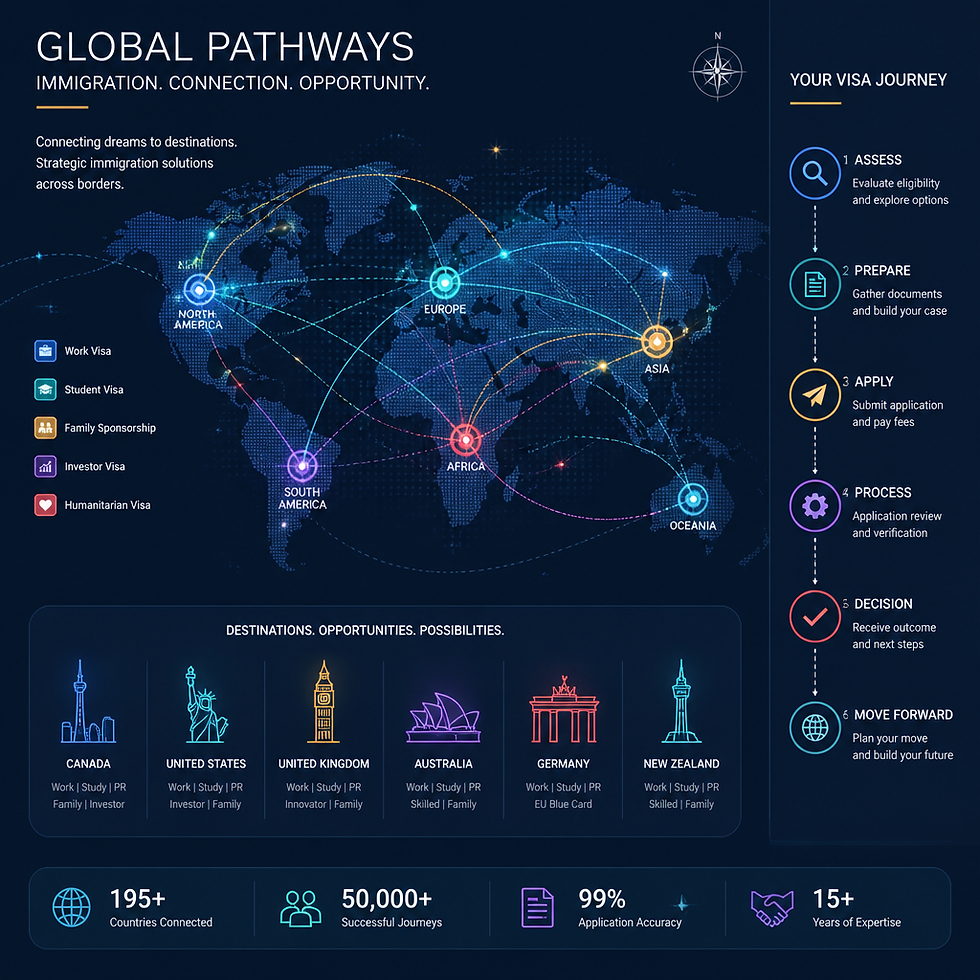
Most Black Americans researching international relocation look at tourist entry first, then scramble to figure out long-term legal status later. That sequencing causes problems. Understanding the full menu of long-stay visa categories before you commit to a destination changes which countries are actually viable for your situation.
Digital Nomad Visas
Digital nomad visas are currently available in a growing number of countries. Portugal's D8 visa, Spain's Digital Nomad Visa, Costa Rica's remote worker program, and options in Mauritius and Namibia all exist for remote workers and freelancers. Income thresholds, stay durations, and renewal options vary significantly by country. Portugal's D8, for example, requires roughly 3,680 euros per month in demonstrated income (verify current requirements before applying, as these figures are updated). Costa Rica's program requires at least $3,000 per month for a single applicant. These are not tourist visas, they are legal status pathways that allow you to live and work remotely without being employed locally.
Passive Income and Retirement Visas
Several countries offer residency to people who can demonstrate stable passive income, even without working remotely. France's long-stay visitor visa, which converts into a residence permit on arrival, is available to people with sufficient passive income. These programs tend to attract less scrutiny than work visas because the applicant is not competing for local employment. For Black Americans with investment income, retirement income, or rental income from U.S. properties, this category is frequently underexplored.
Investment-Linked Residency
Investment visas exist across Europe, Latin America, and Africa. They require proof of funds, investment documentation, and often a legal opinion letter from a local attorney. These programs typically take longer to process than digital nomad visas, but they come with stronger long-term residency protections and, in some cases, a path toward citizenship. For high-earning Black professionals, this pathway is worth mapping out early even if it is not the immediate entry route.
Ghana's Right of Abode
This is the visa pathway most mainstream expat resources ignore entirely. Some Black Americans of African descent may qualify for Ghana's Right of Abode, which provides permanent residence, visa-free entry, and the right to work without a separate work permit. It is a program specifically relevant to the African diaspora and one of the most direct paths to legal stability in Africa for those who qualify. Research the eligibility requirements through official Ghanaian immigration channels, not third-party comparison sites.
Documentation That Actually Works
A common mistake Black Americans make when applying for visas abroad is treating the official document checklist as a ceiling. It is a floor. In practice, bringing the minimum required documentation and nothing more leaves your application vulnerable to discretionary requests that can delay or derail it. Over-documentation is a deliberate strategy, not a sign that you are anxious about the process.
The Core Document Stack
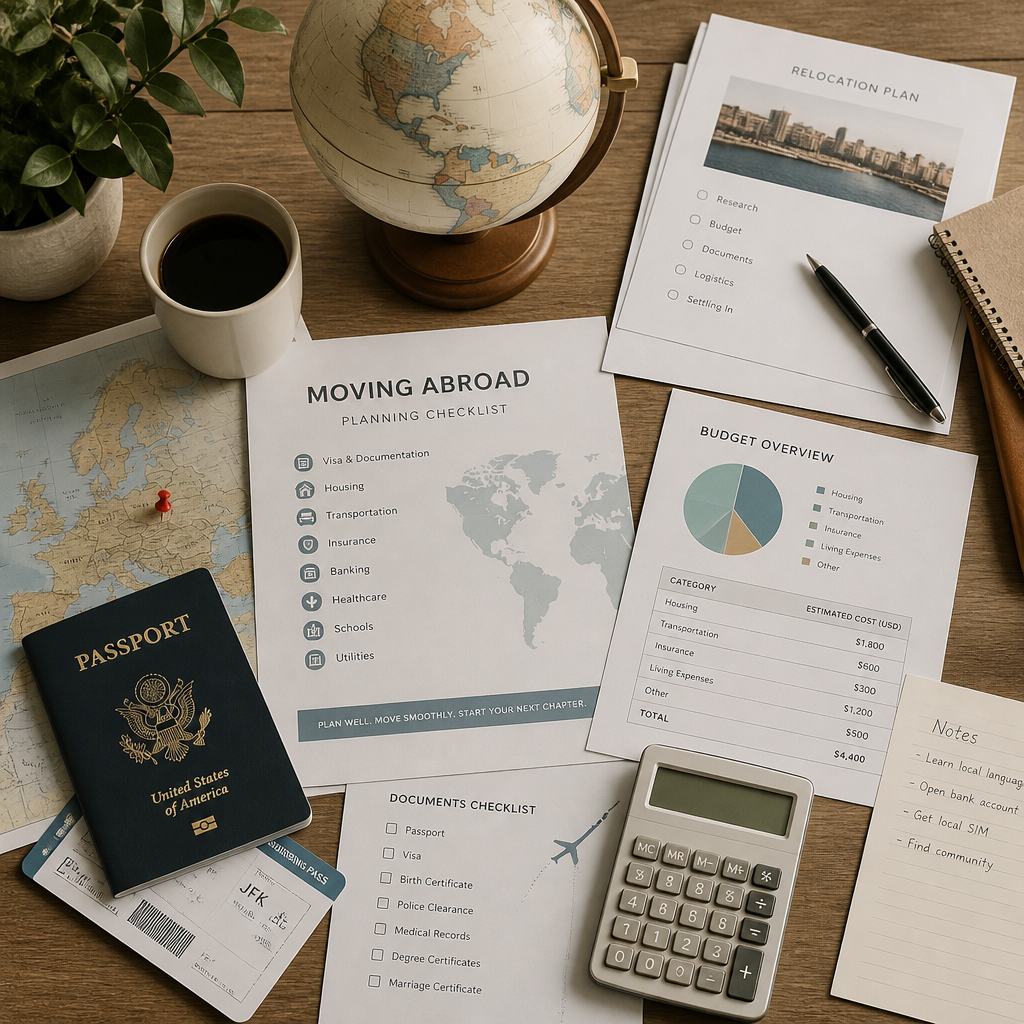
For most work and residency visas, the foundation requires: a valid passport with at least 12 months of remaining validity, an apostilled birth certificate, a police clearance or background check from every country you have lived in for a significant period, proof of income in the form of tax returns and bank statements, proof of accommodation (a lease, ownership documents, or a letter from your host), and health insurance that meets the destination country's minimum coverage requirements. Investment visas add proof of funds and investment documentation on top of this list.
Pro tip: The apostille requirement catches many applicants off guard. Not every country is a signatory to the Hague Apostille Convention, and the process of getting a U.S. document apostilled can take weeks. Start this process as early as any other step in your preparation.
Financial Documentation That Holds Up
A single large bank deposit right before you apply does not tell a convincing story to a consular officer. What holds up under scrutiny is a consistent account history over three to six months showing stable, recurring income. If your income comes from multiple streams, document each one separately with clear sourcing. Freelance income should show client invoices. Investment income should show account statements with clear dividend or gain histories. Passive rental income should show lease agreements and payment records.
Pro tip: Request certified translations of any non-English documents well in advance. Consular officers are not obligated to work through imprecise or uncertified translations, and an unclear document gives them grounds to ask for a new submission, which resets your timeline.
The Police Clearance Trap
Many applicants budget two to three weeks for this step and then discover that background checks from previous countries of residence, combined with apostille processing, can take two to three months. If you lived abroad for any significant period before this application, countries you resided in are also on the list. Request all police clearance documents as your very first step, not your last.

Top Destinations and Their Visa Landscape for Black Americans
Destination selection and visa strategy are not two separate decisions. The country you choose determines which legal pathways are available, what income thresholds apply, and how straightforward the consular process tends to be. These are the destinations that Black Americans are moving to in significant numbers, with an honest look at the visa reality in each.
Ghana
Ghana sits at the top of most Black American expat lists for a reason: cultural alignment, an active diaspora community, and the potential for a Right of Abode pathway that is unique to the African diaspora. The visa landscape here is more accessible for African Americans than for other U.S. expat groups, but navigating Ghanaian bureaucracy still benefits from local legal counsel. If you have African heritage, check your eligibility for the Right of Abode before assuming a standard visa is your only option.
Portugal
Portugal continues to attract Black Americans who want a European base with legal residency options designed for people with independent income. The D8 Digital Nomad Visa and the D7 Passive Income Visa are the most relevant pathways. Lisbon and Porto are the most popular cities, but their popularity has driven up housing costs significantly. Smaller cities like Coimbra and Braga offer lower costs, though they have fewer international services and less racial diversity. Portugal has a history of African cultural influence, and the society is generally described as more racially nuanced than some other European destinations, though Black expats report experiences that vary considerably depending on location.
Mexico
Mexico is a practical choice for Black Americans who want proximity to the United States combined with a significantly lower cost of living. The Temporary Resident Visa, which requires proof of sufficient income or savings, is the standard entry point for people planning to stay longer than six months. Income thresholds are updated periodically, so verify current requirements with official Mexican immigration sources before applying. Cities like Mexico City, Oaxaca, and Puerto Escondido each have distinct expat communities, with varying levels of racial diversity and different day-to-day experiences for Black residents.
Colombia, Panama, and Senegal
Colombia and Panama have both built accessible residency frameworks for people with remote income or investment activity. Senegal is increasingly on Black American radar as a West African destination with a strong cultural connection for the diaspora, though its formal digital nomad infrastructure is less developed than some Latin American options. In each of these locations, the quality of your legal guidance on the ground will determine whether your application goes smoothly or turns into a months-long ordeal.
Visa Approach Comparison: Which Route Fits Your Situation
Visa Route
Best For
Key Considerations for Black American Applicants
Digital Nomad Visa (Portugal D8, Spain, Costa Rica, Mauritius)
Remote workers and freelancers with consistent monthly income above the country's threshold
Income documentation must be airtight. Freelance income requires clear client billing records. Processing time is often faster than residency visas, but income thresholds are firm and verified.
Passive Income / Retirement Visa (France, Portugal D7, Panama Pensionado)
People with investment income, rental income, retirement benefits, or other passive revenue streams
Consistent income history over multiple months matters more than a single large statement. These visas attract less employment competition scrutiny but require clear documentation of income sources.
Right of Abode / Diaspora Pathway (Ghana)
Black Americans with documented African heritage, particularly those of Ghanaian descent or broadly West African lineage
Eligibility criteria are specific and should be verified directly with Ghanaian immigration authorities. This pathway provides stronger long-term stability than most visa routes and should be explored before defaulting to a standard tourist-to-resident track.
Common Mistakes That Get Applications Rejected
Rejection in the visa process is rarely about one catastrophic error. It is more often the accumulation of small gaps that give a consular officer reason to pause. These are the mistakes that appear most consistently in the Black expat community and that are entirely preventable with preparation.
Treating the Document Checklist as Complete
The official checklist tells you the minimum required for a technically valid application. It does not tell you what actually gets applications approved when the officer has discretion. Supplementing every required document with supporting context (for example, not just a bank statement, but also a letter from your employer confirming remote work arrangements and a breakdown of your income sources) reduces the space for ambiguity that gets used against Black applicants.
Not Hiring Local Immigration Help
This is the most expensive mistake to make cheaply. A local immigration attorney or licensed relocation specialist who operates in the destination country knows which consular officers are more demanding, which translation standards are actually enforced, and what informal norms apply to the process that are not written anywhere. Language barriers have proven particularly costly for Black expats in visa situations. Paying for local legal guidance is not a luxury.
Applying Too Close to Your Target Move Date
Build in three to six months for most work and residency visas. Digital nomad visas can process in weeks, but delays happen. If your passport is expiring within twelve months, renew it before you start your visa application, because an expiring passport will require the entire application to be restarted. Many applicants also discover the apostille requirement or the multi-country police clearance requirement too late to handle it without rushing, which produces errors that slow the process further.
Using a Bank Statement That Does Not Tell a Consistent Story
Depositing a large sum into your account immediately before applying, or showing a bank balance that does not match the income figures on your tax returns, gives an officer grounds to question your financial profile. Inconsistency in financial documentation is one of the most common causes of requests for additional information, which add weeks or months to processing time. Make sure your income documentation tells the same coherent story across every document you submit.
Ignoring the Emotional and Practical Cost of Immigration Ambiguity
Going through a visa process with no community around you who has done the same thing before is genuinely isolating. The Black expat community, including resources and networks available through platforms like BlackExpat.com, exists precisely because this process is harder when you navigate it alone. Connecting with people who have gone through the specific visa process for your target country before you apply gives you information no official guide will contain.
Plan it with the Black Travel Network
Start with Asia — honest country guides for Thailand, Japan, Vietnam, Bali and the Philippines.
Watch Black expats who made the move — the Moving to Asia section on BlackTraveler.tv.
Get the free 72-hour Asia guide — airport, money, SIM and your first three days.
Some links are affiliate links. Booking through them costs you nothing extra and keeps these guides free.
Frequently Asked Questions
Do Black Americans face racial bias in international visa processes?
The honest answer is yes, in many cases. Consular discretion is broad, and anti-Black bias documented globally does not stop at consulate doors. The practical response is to over-prepare, to document more than the minimum, to hire local legal representation, and to connect with other Black expats who have navigated the same consulate. Naming this reality is not pessimism, it is preparation.
What is the difference between a digital nomad visa and a long-stay residency visa?
A digital nomad visa typically allows you to live in a country for a defined period (often one to two years, sometimes renewable) while continuing to work for foreign clients or employers. A long-stay residency visa or permit is a broader legal status that may not require remote employment and can be based on passive income, retirement income, or investment. Residency visas often have stronger long-term protections and may count toward permanent residency or citizenship timelines, while digital nomad visas are more transient by design.
How much money do I need to show for a long-stay visa?
This varies by country and visa type. Portugal's D8 Digital Nomad Visa requires income of roughly 3,680 euros per month (verify current official requirements before applying). Costa Rica's digital nomad program requires at least $3,000 per month for a single applicant. France's long-stay visitor visa requires sufficient passive income, often in the range of 1,400 to 1,500 euros per month or more. These figures are updated by each country, so treat any third-party figure as a starting point and confirm with the official consulate or immigration authority.
What is an apostille and why does it matter for visa applications?
An apostille is a form of authentication that certifies a document (such as a birth certificate or background check) for use in another country that is a signatory to the Hague Apostille Convention. Many countries require apostilled documents as part of a visa application. The apostille process in the United States involves submitting your document to the Secretary of State's office at the state level, or to the U.S. Department of State for federal documents. The process takes time, and not every destination country is an apostille signatory, so check the requirements for your specific destination early.
Is Ghana a realistic destination for Black Americans without West African ancestry?
Yes, though the legal pathway differs depending on ancestry. Black Americans without documented West African heritage will not qualify for Ghana's Right of Abode, but can still apply for standard residency and work permit pathways. The country has an active and growing diaspora community, and there are established expat networks specifically for Black Americans. The practical experience of living in Ghana as a Black American is distinct from the visa pathway, and both deserve research through people who have actually done it.
Should I hire an immigration attorney for a digital nomad visa?
For a digital nomad visa application to a country with a straightforward, well-documented process, it is possible to apply independently if your documentation is clean and your income is clearly from a single source. In practice, any complexity in your income structure, any gaps in your documentation, any prior visa rejections, or any significant experience with a language barrier in the destination country makes local legal support worth the cost. For residency visas, investment visas, or the Right of Abode application in Ghana, local legal representation is not optional.
How do I find other Black Americans who have navigated the same visa process?
Community is your most underutilized resource in this process. Platforms and communities specifically built for Black expats, including BlackExpat.com, exist because the generic expat forums often do not reflect the specific experiences and challenges that Black Americans face. Seek out country-specific conversations within those communities. Someone who went through the Portuguese D7 visa process last year, or the Ghanaian Right of Abode application, will give you information that no official guide covers.
Have you been through a visa application process as a Black American? Share what surprised you most, what worked, and what you wish someone had told you before you started.
References
Visa and residency options for expats abroad: a strategic breakdown of legal pathways
Why Black expats are relocating globally and the challenges they face including visa barriers
Countries Black Americans are considering for relocation including visa and residency pathways
Digital nomad visa countries comparison including income thresholds and stay durations
Global directory of long-term visas and residency options for nomads and expats


Comments